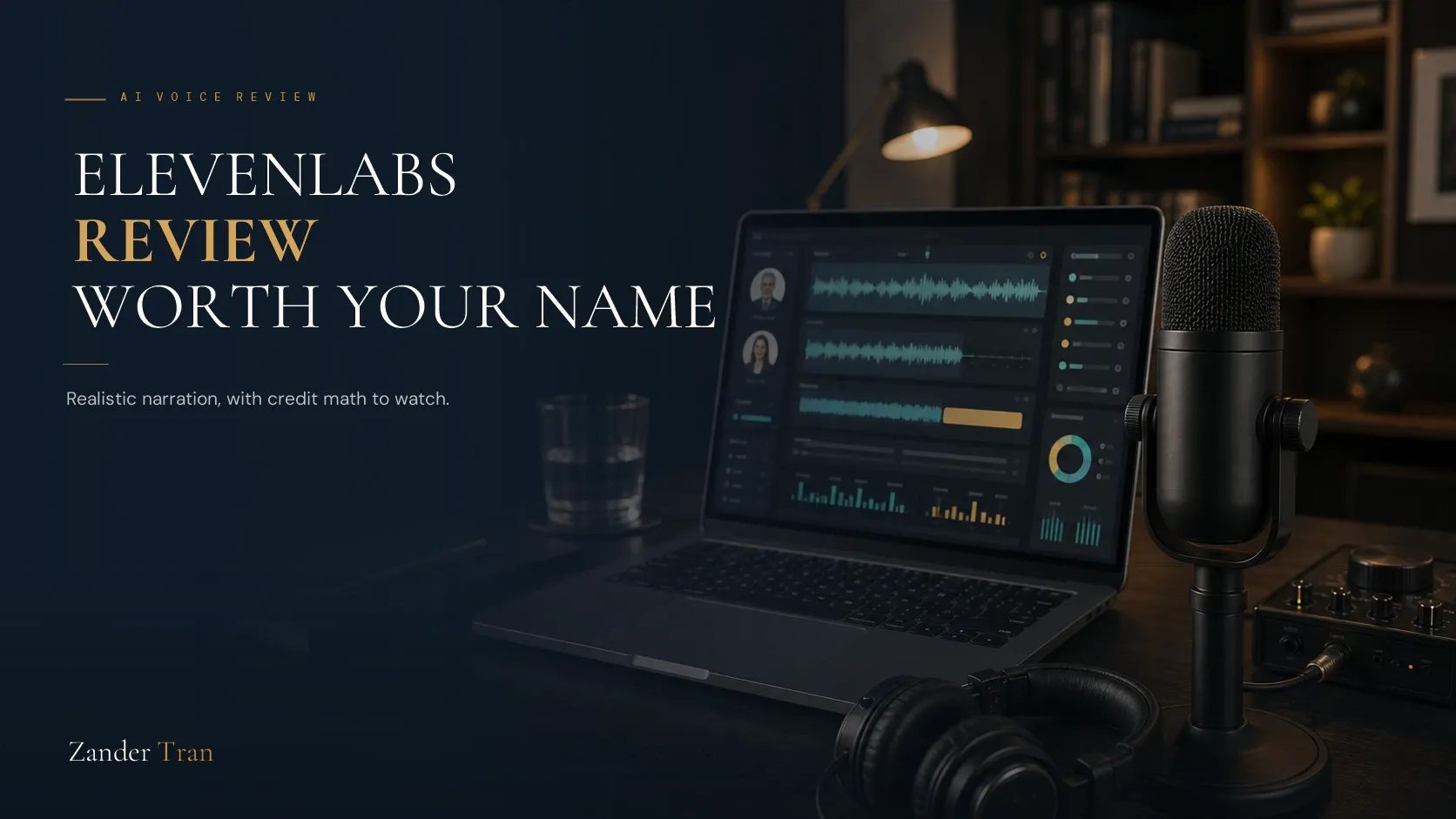
The first time someone plays back an ElevenLabs voice for a stranger, the reaction is almost always the same. They ask which employee recorded it.
That reaction is the entire product. I use ElevenLabs to keep a consistent, natural voice across everything I publish that needs narration, and if you're an experienced professional weighing whether AI voice tools are ready for something you'll put your name on, not just a novelty demo, this review is written from that angle. Quick disclosure: the links here are affiliate links, and I earn a commission if you subscribe, at no extra cost to you.
Then keep reading, because the real answer includes where this tool still trips over its own feet.
Fast Facts
- Best known for: the most natural-sounding AI voice generation available, including voice cloning
- Entry price: $6/month (Starter), with a genuinely usable free tier below that
- Standout feature: the newest voice model produces output most listeners can't identify as AI unless they're specifically told to check
- Real catch: credit consumption is harder to predict than the pricing page suggests, especially when you're regenerating a take
- Rating: 8.5/10
Voice Realism
In Practice: this is where ElevenLabs separates itself from almost everything else on the market. The output is smoother and more emotionally flexible than the flat, over-enunciated cadence you'd recognize instantly from older text-to-speech tools. Longer narration holds up. It doesn't start sounding robotic three minutes in the way cheaper tools do.
It's not flawless. Numbers and abbreviations occasionally trip it up. If your script includes a phone number or an acronym, you'll get a cleaner result spelling it out phonetically yourself rather than trusting the model to guess the right cadence.
Voice Cloning
In Practice: cloning your own voice, or building a consistent branded voice for a project, works well and doesn't require studio-quality source audio to get a usable result. This is the feature that matters most if you want narration to sound like you specifically, not a generic AI voice that happens to be well-produced.
Ease of Use
In Practice: genuinely beginner-friendly for the core task: paste text, pick a voice, generate. Where people get lost is the credit system once they start regenerating takes to fix a mispronunciation. It's not always obvious how much a given regeneration will cost against your monthly allowance until after you've already spent it.
The Credit System, Honestly
The Catch: every plan runs on a monthly credit allowance, and the jump between tiers is steep once you need real volume. The free tier's ten thousand credits is a fair way to test the voice quality. The entry paid tier at thirty thousand credits is workable for occasional narration. Once you're publishing narration regularly, the math pushes toward the Creator tier fast, and several reviewers report the interface makes it genuinely hard to predict costs in advance, not just after the fact.
Budget for this before you commit to a publishing schedule built around it, the same advice I'd give for any credit-based AI tool.
Where It Falls Short
The Catch, continued: beyond the credit unpredictability, the two real limitations are pronunciation of numbers and abbreviations, which sometimes need manual correction, and pricing that climbs quickly at the higher tiers where teams and heavier volume live. Neither is a dealbreaker for a solo expert narrating a few pieces a week. Both are worth knowing before you build a workflow that assumes zero editing.
API and Workflow Fit
In Practice: ElevenLabs isn't just a standalone app. It connects into a broader workflow through its API, which matters if you're already piecing together an avatar tool, a voice tool, and an email platform the way most of the tool categories on this site do. I run scripts through ElevenLabs for narration the same way I run them through HeyGen for avatar delivery: one piece of writing, repurposed across formats without re-recording anything by hand.
If you're not building toward that kind of connected workflow yet, this feature won't matter much today. It's worth knowing it's there once your publishing schedule gets more complex than a single video a week.
Who This Is Actually For
If you want narration, audiobook-style content, or a consistent voice layer across video without hiring a voice artist for every project, ElevenLabs earns its price at the entry tiers. If you're producing high volume with heavy team collaboration needs, the cost curve gets steep enough that it's worth running the math against your actual publishing schedule first.
Try ElevenLabs → (affiliate link) Then check out the AI Tools hub for the rest of the toolkit this fits into.
Watch The Invisible Expert Method
19 years building authority platforms for celebrities and executives. Now I built one for myself, without going on camera. Watch the free training to see exactly how it works.
Watch FreeDoes ElevenLabs actually sound human, or is that overstated?
For most listeners, yes. The newest voice model produces output that people generally can't identify as AI unless specifically told to check for it. Numbers and abbreviations are the exception where it still shows its seams.
Is ElevenLabs worth it for someone who isn't a professional voice actor or producer?
Yes, that's actually the core use case. You don't need audio production experience. You need a script and a sense of the tone you want.
How does ElevenLabs pricing actually work?
It's a credit-based system, not a flat monthly fee for unlimited use. Different tiers unlock more credits, and regenerating takes to fix a mispronunciation uses credits too, which is the part people underestimate when budgeting.
Can ElevenLabs clone my own voice?
Yes, and it doesn't require studio-quality source audio to produce a usable clone. This is one of the platform's strongest features for anyone building a consistent, recognizable voice.
Is ElevenLabs better than just hiring a voice actor?
For most ongoing content needs, it's cheaper and faster, with the tradeoff being occasional manual correction on tricky pronunciations. For a single high-stakes production, a professional voice actor may still be the better call.