Think of AI voice cloning the way you'd think of a signature. Your handwritten signature isn't just letters, it's specific enough to you that a bank can verify it's really yours. Voice cloning does something similar with sound: it studies the specific pitch, cadence, and texture of your voice closely enough that new words, ones you never actually said, come out sounding unmistakably like you.
If you're an experienced professional wondering whether this technology is something to use or something to worry about, this guide covers both, in plain language, no engineering background required. Watch the free training if you want to see the broader method this fits into.
Then keep reading, because the honest answer is more useful than the hype cycle around this topic.
What Is AI Voice Cloning?
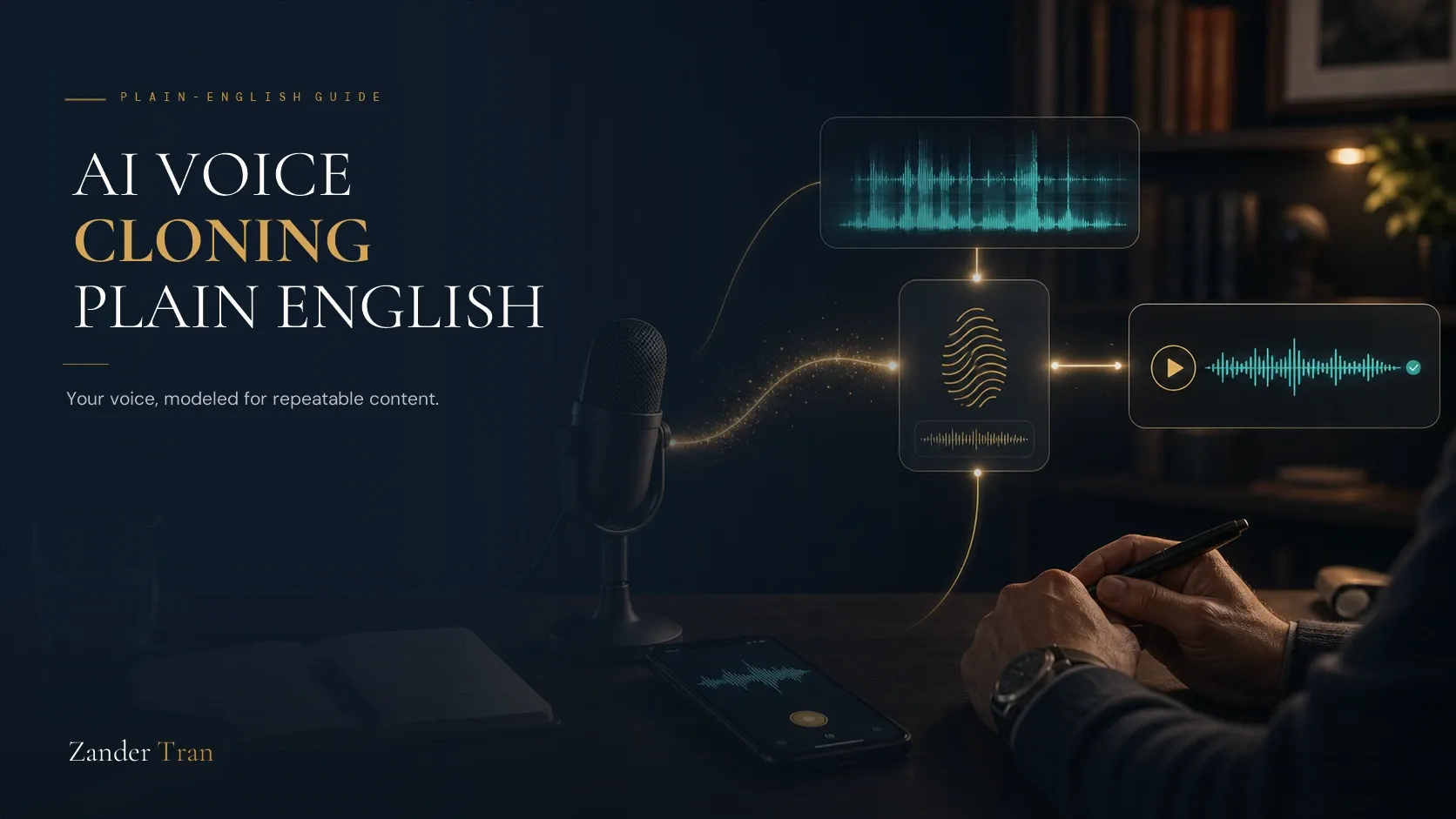
AI voice cloning is technology that uses machine learning to replicate a specific person's voice closely enough that new, typed text can be spoken back in that voice, tone, accent, and cadence included. It's not a recording. It's a model of how you specifically sound, built from samples of your actual speech, that can then generate audio you never recorded.
Modern versions of this technology work from surprisingly little source material. Some tools can produce a usable clone from just one to five minutes of clean sample audio, though more and higher-quality samples generally produce a more convincing result.
How Does AI Voice Cloning Actually Work?
The process behind it breaks into five stages, and understanding them helps explain both why it works and where it can still fall short.
Audio collection. It starts with recordings of the target voice. Quality and variety matter here. A few minutes of clean, varied speech produces a better result than a longer recording of flat, monotone reading.
Processing. The raw audio gets cleaned up. Background noise removed, volume normalized, silence trimmed, then broken into smaller pieces the system can analyze individually.
Feature extraction. This is where the system identifies what actually makes your voice yours: pitch patterns, pacing, the specific way certain sounds get shaped. Spectrograms, visual maps of sound frequency over time, help the system see patterns a human ear would miss.
Model training. The system builds a model from those extracted features, essentially learning the rules of how your voice behaves so it can apply those rules to text it's never heard you say.
Speech synthesis. Once trained, the model can take any typed text and generate audio that applies your voice's specific characteristics to it. This is the step that actually produces new, usable audio.
What's the Difference Between AI Voice Cloning and Regular Text-to-Speech?
This distinction trips people up constantly, and it matters if you're evaluating tools. Regular text-to-speech uses a stock voice that's already built into the software, one of a library of preset options that don't belong to any specific real person you know. Voice cloning builds a new, personal voice model from a sample of one specific person's actual speech.
In practical terms: picking a voice from a dropdown menu in an AI video tool is text-to-speech. Uploading a sample of your own voice so the tool generates new audio that sounds like you specifically is cloning. Most of the major AI voice platforms offer both, as separate features within the same product.
What Can AI Voice Cloning Actually Be Used For?
The applications that matter most for a business owner or independent professional: keeping one consistent voice across video and audio content without re-recording narration every time, producing audiobook or e-learning content at a pace live recording can't match, and dubbing your own content into other languages while still sounding like you rather than a generic translator's voice reading a script.
Beyond business use, the same technology shows up in gaming, virtual assistants, and accessibility tools that let someone who's lost their natural speaking voice continue communicating in a version of their own voice built from earlier recordings.
For the specific reader this guide is written for, the clearest example is the workflow most avatar-based content already runs on. Write a script once. Generate the narration in your cloned voice. Pair it with an AI avatar for video, or publish the audio alone for a podcast-style piece. Update the script, generate again. What used to require booking studio time or re-recording every revision becomes a text edit followed by a few minutes of processing.
What Are Good Examples of AI Voice Cloning in Practice?
A consultant records a course once, in one sitting, then generates narration for dozens of lesson updates over the following year without ever returning to the microphone. A coach translates a single flagship talk into several languages, in a version of their own voice, instead of hiring separate voice talent for each market.
It also shows up in smaller, everyday ways. A newsletter writer turns a written piece into an audio version for subscribers who prefer to listen, adding no second production step to their week. A retiring executive records enough sample audio before a planned career transition that their voice remains available for training material their former team still relies on months later.
None of these require the person to be a technical expert. All of them require deciding, once, that a text script is worth turning into audio more than a single time.
What Do You Actually Need to Create a Good Voice Clone?
Clean source audio matters more than any tool's marketing page suggests. A quiet room and a decent microphone beat an expensive setup with background noise every time. The sample also needs some range in it: a reading with natural variation in pace and tone gives the model more to work with than a single flat, monotone script.
The detail most people skip is matching your sample's energy to how you'll actually use the clone. Recording a slow, formal reading and then expecting the clone to deliver something conversational produces a mismatch you'll notice immediately. Record the sample in roughly the tone you plan to publish in.
A studio isn't necessary. Ten or fifteen minutes of focused attention to those details is, and that's a smaller time investment than most people expect going in.
Is AI Voice Cloning Legal, and Should I Be Worried About Using It?
Short answer: cloning your own voice, with your own consent, to use in your own content, is a fundamentally different situation than the deepfake voice scams that show up in news coverage of this technology. Those stories are almost always about someone's voice being cloned without their knowledge or permission, then used to impersonate them. That's the legitimate concern driving most of the public worry around this term.
Using a tool to clone your own voice for your own published content doesn't raise that issue. You're the person whose voice it is, and you're the one deciding how it gets used. The legal and ethical questions around voice cloning are almost entirely about consent, not about the technology itself being inherently problematic.
Where This Fits Into Building Visible Authority
Voice cloning solves a specific, practical problem for an experienced professional building a platform: consistency without the time cost of re-recording. You can write once, produce narration or an avatar video in your own voice, and repurpose that same script across formats, all without sitting in front of a microphone for every single piece of content.
That's the entire reason this technology matters for this audience. Not novelty. Time.
If you want to see which specific tools actually handle this well, the best AI voice generator comparison covers the paid options worth considering, and the best free options cover where to start if your budget is zero right now.
Watch The Invisible Expert Method
19 years building authority platforms for celebrities and executives. Now I built one for myself, without going on camera. Watch the free training to see exactly how it works.
Watch FreeDo I need special recording equipment to clone my voice?
No. Most modern voice cloning tools work from audio recorded on a decent microphone or even a phone, as long as the recording is reasonably clean and free of background noise.
How long does it take to clone a voice with AI?
With current tools, the actual cloning process often takes minutes once you have clean sample audio ready. The bigger time investment is usually recording good source material in the first place.
Can AI voice cloning capture emotion, or does it always sound flat?
Modern voice cloning handles a reasonable emotional range, especially for calm, direct delivery. It's less convincing for content that needs to swing through big emotional extremes in a short space.
Is it obvious to listeners that a voice is AI-cloned rather than real?
Increasingly, no. The more advanced tools produce output that most listeners can't identify as AI-generated unless they're specifically told to listen for it. Quality varies significantly between tools, though.
Do I own the rights to my own cloned voice?
Generally yes, since it's built from your own voice with your own consent, but the specific terms depend on the platform's user agreement. Worth reading the terms of service for commercial use rights before publishing content built on any cloned voice.